
"Risk Off" time
On the cusp of the biggest meltdown since the Global Financial Crisis

In this update:
Just the start: the risk of a far larger energy crisis
How that could provoke a major global recession
“America First”: the risk of restricted US oil and gas exports
What investors should do about it
The world could be on the cusp of the biggest economic and financial meltdown since the Global Financial Crisis (GFC).
I’m not seeking to sow panic. I’m just telling you what I think, based on current evidence.
We could be at the start of a global energy crisis that will have severe implications all around the world.
If so, it means that investors should be cutting their risk exposure and bulking up investment weightings to relative safe havens. Although there’s no single portfolio panacea.
This is my conclusion after digesting recent news flow from my perch in Argentina, a country that’s not exactly unfamiliar with crises. Which is why I’ve written this on Sunday, so that you can see it early on Monday.
The GFC got rolling in early 2007, reaching its worst point in late 2008 and early 2009. With the unfolding situation in the Middle East, we could be in the equivalent of early 2007.
It’s already bad. But the full realisation of how bad it could get hasn’t yet registered properly for most people, including investors. Or so it seems to me.
The US and Israel launched strikes against Iran on 28 February, just over three weeks ago. Theories abound about what precipitated the choice of timing. But the actual trigger isn’t that relevant.
We are where we are. And we need to think about what is happening now, and what could happen next.
A snippet of insight came from a sister of mine and her husband. He has a business in Sri Lanka, so they visit on a frequent basis. For the latest trip, they travelled there from England about a week before hostilities broke out in the Middle East.
They are set to fly home on Tuesday night. The flight connects in Dubai, which is clearly a concern. A few days ago we exchanged messages between Buenos Aires and Colombo via the modern wonder of WhatsApp.
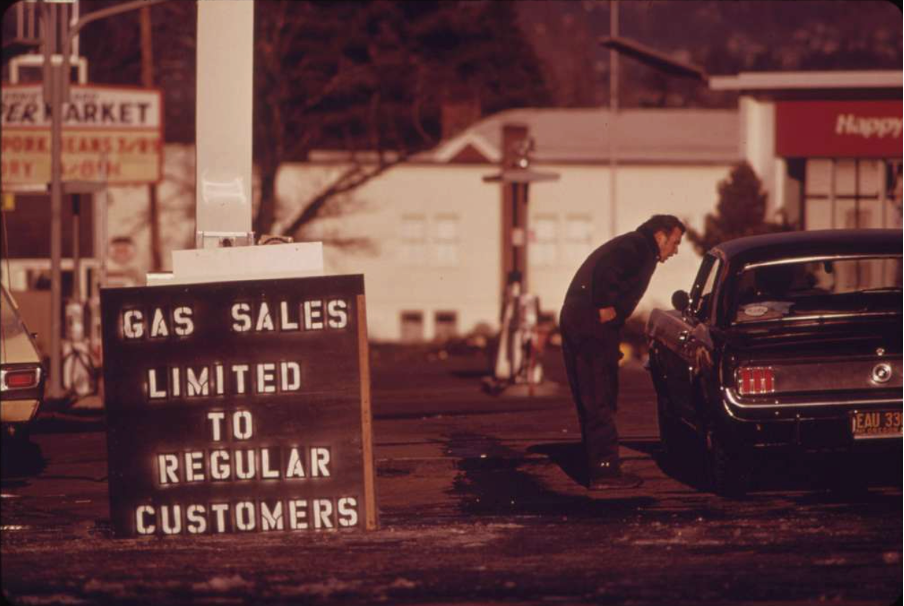
My brother-in-law wrote the following: “Fuel rationing came in here at the start of the week. Long queues at the pumps and Uber prices through the roof.”
Is this a foreshadowing of what’s to come for other countries? In particular, those that are major net importers of oil, natural gas and food? (And yes, unfortunately the UK is on that list, after many years of political incompetence.)
It seems that the Iranian reaction has been far more vociferous than the US (or Israel) expected or planned for. Iran has launched missiles and drones at targets around the region, mainly of the military or infrastructure varieties, but including some residential locations too.
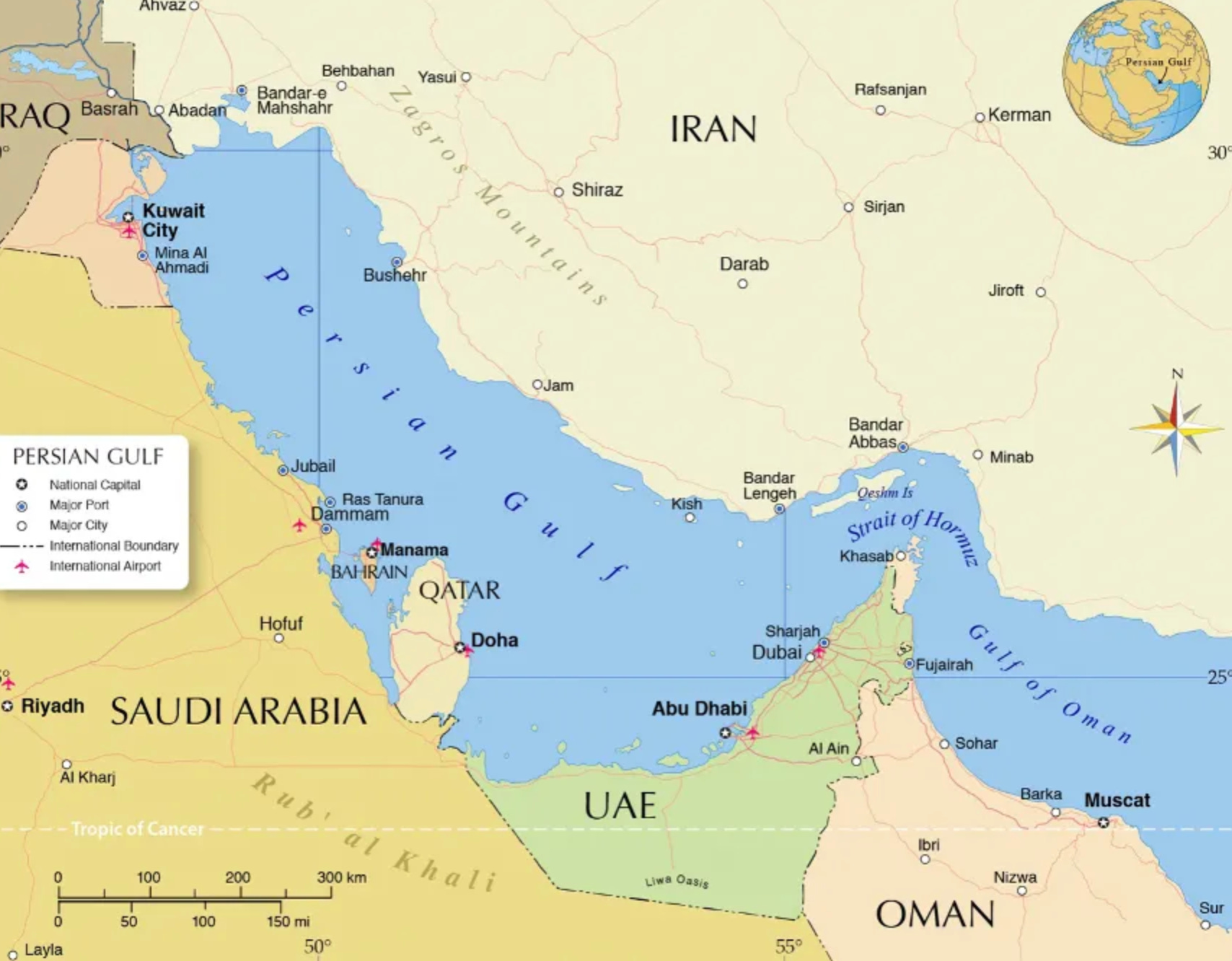
The Strait of Hormuz is effectively closed to almost all shipping. As I pointed out on 3 March, about a third of seaborne oil exports transit through this narrow gap, which is straddled by Iran to the north, and Oman and the United Arab Emirates (UAE) to the south. That’s about 20% of all global oil production.
It seems that US planning didn’t consider the risk of the strait being closed. Or, if it did, then no plan was made to keep the strait open.
It’s a gigantic, monumental, colossal screw-up that adversely affects the entire world, including the US itself.
Oil and natural gas supply about 59% of the world’s energy needs. (Whereas renewables - principally wind and solar - are less than 6%. The remainder comes from coal, nuclear, and hydroelectric power.)
The situation is that a very large portion of the world’s essential oil and natural gas supplies are now stranded in the Persian Gulf. Major producing countries that are affected include Saudi Arabia, Qatar, Kuwait, Iraq and the UAE. And, of course, Iran itself, which is a major producer of both oil and natural gas.
Inevitably, this has led to higher oil prices globally, and a big spike in natural gas prices in Europe and Asia, both of which regions rely heavily on imports of liquid natural gas (LNG) shipped in tankers.
At the time of writing, Brent crude is priced at $112 per barrel, up from around $70 in late February, and less than $60 as recently as early January. Meanwhile, West Texas Intermediate (WTI) is quoted at $98.23 per barrel, also up sharply in recent weeks. Given developments over the weekend, I think there’s a good chance that those prices will take another leg up on Monday morning.
That seems bad enough. But I’ve also seen reports of crude oil in Dubai already trading as high as $170 per barrel in recent days.
The US was quick to relax sanctions against Russian oil, to offset the supply shortages. And various countries announced that they would release their strategic oil reserves onto the market. Presumably both actions have had a dampening effect on the main benchmark prices.
But how long can that last?
The strategic reserves are said to only contain enough oil to offset supply shortages for a month or two.
What’s more, the war has evolved to a stage where Iran is targeting crucial infrastructure across the region, such as oil fields, refineries, petrochemical plants, and ports.
Once oil and gas production, refining / liquefaction, processing, and shipping infrastructure is damaged then it could take months - or even years - to bring it back online.
In one example, I read a story on Sunday that Shell plc - the large oil & gas multinational - has suffered significant damage to its major gas plant at Ras Laffan in Qatar. This plant converts natural gas into liquid products such as jet fuel, lubricants and coolants. This could impact company profits for many months, or even years.
Another story I read said that European airlines are starting contingency planning in the case of fuel shortages. They may have to cancel flights to various Asian destinations (e.g. Vietnam), in the event that they can’t refuel at the other end to bring the planes back.
The damage to oil & gas and port infrastructure is potentially far more serious than the closure of the Strait of Hormuz.
Even if the war stopped today and the strait was reopened, oil and gas, along with products derived from them (including fertiliser), could remain in short supply for a prolonged period. Which means higher expectations for post-war prices.
Meanwhile, the war doesn’t actually look like it’s ending any time soon. In fact, it looks like it’s escalating.
US President Trump said he will “obliterate” Iranian power infrastructure if the strait isn’t reopened.
Iran says it will strike more energy infrastructure around the region.
There’s talk of a “boots on the ground” US invasion of Iran’s Kharg island, a major hub for storage and shipping of Iranian oil.
And European countries look increasingly likely to get dragged into the war, given the snowballing energy crisis.
Will the US have to occupy the part of Iran that’s beside the Strait of Hormuz, in order to secure safe passage for shipping? Will it have to launch a full invasion against a country with a population of 93 million people, or about twice the number living in either Iraq or Afghanistan?
Iran is also physically large, being the 18th largest country in the world, or about half the size of India. That’s a lot of land to occupy.
It’s well known that Iran is run by religious fanatics. Its leader was killed early on in the war, and replaced by his son, Mojtaba Khamenei. As well as losing his father, the new “Supreme Leader” also lost his mother, sister, nephew, and brother-in-law in that attack.
Does that sound like the sort of person that’s about to negotiate a truce or surrender? I doubt it.
Could there be a civil war in Iran, with outside support?
Could Iran lose the war, but continue to strike at regional infrastructure or shipping for years to come?
There are so many unanswered questions. But the risks of significant and prolonged disruption to supplies of oil, natural gas, and the products derived from both seems very high.
Major recession risk
One definition of an economy is “energy transformed”. Energy is the essential input for everything. Much higher energy prices, caused by supply shortages, will feed into the prices of everything.
Actually, it’s potentially even worse than that. It doesn’t matter how high oil and gas prices go if there simply isn’t enough of them to go around. There could be major shortages, forcing countries to prioritise essentials, such as food distribution.
That means other, less essential activities could be closed down. Domestic supplies of natural gas and electricity could be rationed. Private car owners could face long queues to buy fuel, or worse. Planes could be grounded and trains could be kept in the depot.
Government fiscal deficits could explode as stagflationary recessions bite, and real tax revenues decline sharply.
“America First”: whither US oil and gas exports?
President Trump has always been clear that his policies are based on “America First”. We saw this with tariff policies, aims to control Venezuelan oil, threats to occupy Greenland, and so on.
This raises the risk that the US could stop or limit exports of oil and gas produced within its borders. The aim would be to reduce domestic prices by causing a glut of domestic supply. Not least because there are US mid-term elections coming up in November, and gasoline prices are a politically sensitive topic in the US.
So far, the official line (from Scott Bessent, US Treasury Secretary) is that export restrictions aren’t being considered. But if we’ve learnt one thing about the Trump presidency, policies can change radically from one day to the next.
Thus, such moves shouldn’t be ruled out. And the risk of them climbs higher the longer the war drags on, and the higher that oil and gas prices climb.
The threat of stopping US exports to selected countries could also be used as leverage to force participation in the war. For example, those European countries that are now dependent on US liquified natural gas (LNG) shipments, especially now that supplies from Qatar have stopped.
Of course, any such move would damage the profits of US oil and gas companies, and meet with plenty of political resistance. But it’s something to watch out for, especially if you own stocks of oil & gas companies with a large share of production inside the US (as well as those with production or distribution stranded inside the Persian Gulf).
But the real damage would be done to every country outside the US. It would cause further global shortages, and drive international oil & gas prices even higher.
Another populist route - which could happen outside the US as well - would be to cap energy prices, whether for fuel or electricity bills. The question then becomes: who would pay for it?
The burden could be imposed on oil & gas and utility companies, decimating their profits. This has happened in Argentina in the past.
Or it could be covered via subsidy payments from the government, putting even more pressure on stretched government finances. This has also happened in Argentina in the past.
What does it all mean for investors?
If this war continues for long then the world faces a major energy crisis and severe recession.
Based on current evidence, I believe there is a high probability that the war will last for many months more, and maybe run into years. Although that opinion could change.
Nothing is ever certain, and the situation continues to unfold. But investors need to weigh the odds and act accordingly.
None of us can control the outcome of events in the Middle East. But we can try to protect ourselves from its potential consequences, at least financially.
Here are some suggested steps to take: