
Greenland. Red flag.
Potential investment implications for US assets.

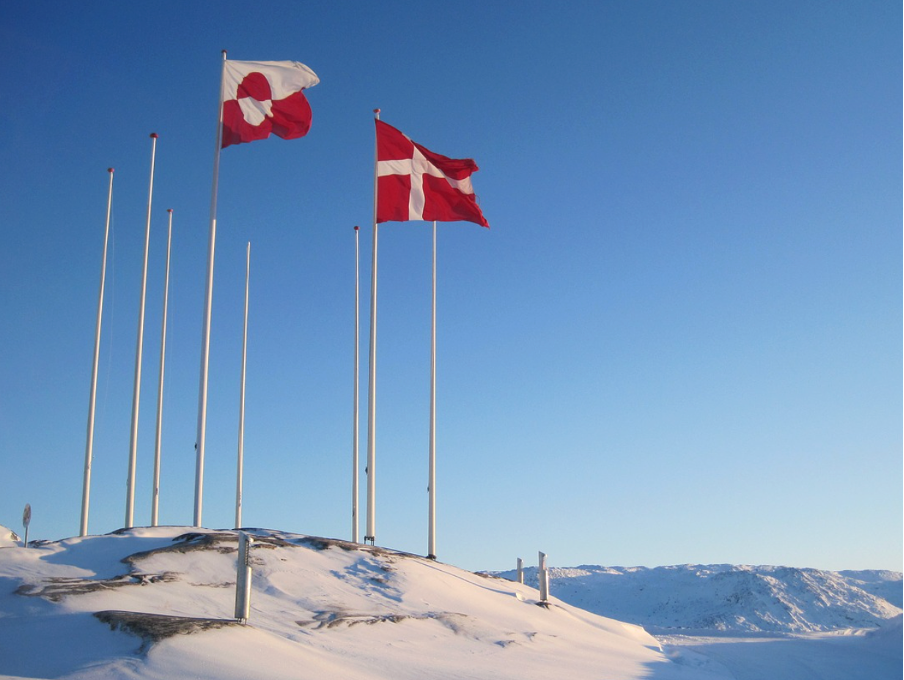
Over the past year or so, I’ve been helping someone to work out how to invest a substantial inheritance. It remains work in progress.
The basic idea is to ease into a diversified portfolio of stock ETFs and quality stocks (big, stable, multinational companies), supplemented by gold and some liquidity (cash deposits, T-bills, that type of thing).
Exotic, high-fee funds and products - of the type that the financial industry loves to sell - will not feature (e.g. leveraged debt funds, hedge funds, private equity, private credit, structured products). That’s because these are usually “black boxes”, where the end investor has very little idea of what they actually own, or the risks involved.
Once complete, it will be the type of diversified portfolio that requires virtually no trading or tweaking. It should work as a long-term way to preserve wealth, and to grow it steadily in real terms. (I may write up more details of the types of things that are included in the future.)
The aim is to achieve target allocations over about three years, rather than jumping into everything at once. This reduces the chance of suffering a major loss on the starting capital, in the event that there is a sharp fall in stocks in the short term.
An allocation to gold was bought early last year, which has clearly done extremely well (see the latest gold and silver update here). But no more will be added at this point, given gold’s tremendous bull run over the past couple of years. Now doesn’t feel like a good entry point for major new investments into gold.
A modest allocation to stocks is already in place. But, for now, there is a zero allocation to US stocks.
This is for the obvious reason that the US stock market is currently eye-wateringly expensive (for more information, see here). US stocks were only more expensive for a brief period in 1999 and early 2000.
The historical track record strongly suggests that this would be a terrible time to invest in US stocks. High market valuations are usually followed by long periods of poor performance, usually starting with a crash (which could last a couple of years), then a long period to recoup the losses.
A recent decision in the aforementioned portfolio was to convert a large chunk of dollars into Swiss francs. In other words, to park a big piece of the liquid capital into the historically strong currency of a stable and fiscally responsible nation, ahead of eventually investing into productive assets down the line.
This was to hedge against potential dollar weakness. That’s as the current administration continues its activism and aggression against the Federal Reserve, given a political desire for lower interest rates. As well as still running a vast fiscal deficit.
Greenland. Red flag.
Of course, there was also the geopolitical uncertainty to consider. And this is now coming to head with the Trump administration’s threats and actions concerning Greenland. The potential implications for the world in general are huge, although I’ll focus mainly on the potential implications for investors.
In general, I don’t like wallowing in politics in these pages. There’s already far too much political commentary around. But I will write about politics when it impinges on the investment world.
(I also make an exception when it comes to Argentina, given that I’ve lived here for over 17 years, and that there’s a high degree of global interest in the fiscally revolutionary policies of President Javier Milei. What other government is committed totally to a fiscal surplus, and to aggressive deregulation to restore freedom to businesses and individuals? See more here.)
Also, to be clear, I’m not someone that suffers from “Trump Derangement Syndrome”, or TDS. I take a balanced view of his different actions. During his first term I applauded his deregulation efforts and lowering of corporate taxes in the US, but I criticised his tariffs.
I live in a country - Argentina - which has historically had very high protectionist import tariffs. The result was simply a combination of higher prices, less choice, and lower quality of goods. As for the US tariffs announced last year on so-called “Liberation Day”, they were a bad joke, calculated using a puerile and simplistic formula (see here for a reminder).
This was a big signal to the world that the US had become a loose cannon on the policy front. It certainly had a lot of investors questioning their very high allocations to US assets such as stocks or bonds.
This time around, I hoped that Trump would reduce wasteful spending in the US state machine (the “DOGE” initiative), bring the Ukrainian war to an end, and not start any new wars. There’s only been modest progress on the first, the second is still dragging on, and the third... well, we’ll see.
Trump says he wants Greenland because Denmark can’t protect it from Russia and China, and therefore it’s a risk to the USA. Never mind that Canada sits in between. Or that it would be far easier to simply negotiate a larger US military presence in Greenland, without having to make it into another US state and upset just about everyone in Europe in the process.
Over the weekend, Trump slapped extra import tariffs onto goods from eight European countries, for the apparent crime of not supporting US annexation of Greenland.
The countries are Denmark, Norway, Sweden, France, Germany, the United Kingdom, the Netherlands and Finland. The tariff rate will start at 10% in February, and increase to 25% in June, if no deal to purchase Greenland has been reached.
Of those countries, six are members of the 27-country strong European Union (Denmark, Finland, France, Germany, the Netherlands, and Sweden). So this move has actually incensed politicians and citizens in far more than just the eight countries named.
Stating the bleeding obvious, these were all friendly allies of the US, with long and peaceful relations. But now they must have realised that the US is no longer a true friend, at least under the current administration. Instead, it is abusing its power to extort property from others.
Many Americans may believe that Trump’s aim of controlling Greenland is an admirable one. But, even if that were true, the bullying tactics will damage America’s standing with former allies for decades to come. No one will trust the US anymore.
A big red flag has been raised, and is easy to spot.
As far as I can see, the European nations have a pretty weak negotiating hand in this situation. The main reasons include:
Heavy reliance of European banks on the US dollar payments system, which is centred on so-called correspondent banks in New York.
Heavy reliance on US advanced weapons systems, such as fighter jets and missiles, which require US permission or support to use.
Heavy reliance on US liquid natural gas (LNG) imports, having had to rotate away from Russian pipeline supplies, and having pursued policies to wind down domestic production due to misguided Net Zero policies (such as the UK’s anti-North Sea policies).
Larger goods exports to the US than imports from it (in aggregate). Things such as German cars.
But that doesn’t mean that the Europeans have no hand to play, either at the government or individual citizen levels.
Pretty clearly, individual European citizens could express their displeasure via boycotts of American companies and brands, whether the goods or services are produced in the US or closer to home. Obvious examples include things such as Coca-Cola, McDonalds, Amazon, and so on.
This has the potential to damage the overseas profits of US companies, which can be substantial. Although I doubt that the effect would be much at this point. However, if things get more serious, then it could develop into something significant in future.
As for European governments, they have to tread carefully. Reciprocal tariffs on manufactured goods would be symbolic but have relatively little impact, since the US doesn’t sell all that much to Europe. And slapping tariffs on the aforementioned LNG imports would just make something that’s essential into something that’s still essential but more expensive.
What’s more, the US could escalate. Let’s say the EU and others impose a revenue tax on big US tech companies. The US might retaliate with new taxes on the US operations of European multinationals, which are often substantial businesses.
It might even ban all LNG exports to Europe for a time. That’s real power.
America’s weak spot
However, there’s one area where the US is exposed.